Medical records storage: What is it and why is it important?
Last Updated
Oct 12, 2026
Published On
Sep 22, 2026
 37
Table of Contents
Quick summary
Storing medical records is crucial and must be handled carefully, regardless of their format. Compared with paper-based records, digital storage is more convenient. It provides secure storage and easier access to medical information.
Losing medical reports or prescriptions can cause significant trouble. Managing such records is quite challenging without a systematic approach. Physical paper-based records can be lost or damaged, while poorly managed digital records can make information difficult to find or access.
Medical records storage provides a way to securely store and organize crucial health information, including test reports, doctors’ prescriptions, and other relevant documents. This helps individuals keep their medical data organized.
📌 Key takeaways
- Medical records storage refers to the storage of individuals’ health-related data for easy access when required.
- These records can store various data, including medical prescriptions, lab test records, and other treatment history.
- Properly managed digital medical records offer greater convenience, accessibility, and security than paper records.
- Keeping medical records up to date in one place helps prevent outdated information.
- Maintaining a backup is important as it reduces the risk of losing valuable health information.
What is medical records storage?
Medical records storage refers to the process of storing individuals’ medical information, such as doctors’ prescriptions, lab reports, and medical history. This information is organized and stored so it can be easily accessed when needed.
The following are the major types of information it covers:
Personal identification information: It covers the patient’s name, age, date of birth, and other identifying details. Certain information may include Protected Health Information (PHI) and SSNs when handled by HIPAA-covered entities.
Medical history: The record may include information about past health issues and treatments received.
Family medical history: Medical information about the patient’s family members. This covers their past diseases, treatment, surgery, and general health conditions.
Diagnostic information: Laboratory and diagnostic test results, including blood tests, X-rays, MRIs, and CT scans.
Vaccination information: Information related to the patient’s vaccines administered in the past, upcoming, or recommended vaccinations.
Medication history: Past information about what medicines the patient has taken. It may include over-the-counter medicines, supplements, and herbal remedies.
Insurance and billing information: Includes the details needed for healthcare coverage and billing.
Still managing your medical records physically?
Go digital with the My Medical Records app. Keep your health information organized and accessible 24/7.
Download Now
Types of medical records storage
Storing medical records can be broadly classified into the following categories:
1. Physical medical records storage
It is a traditional recording method in which medical data is stored on paper, organized into files and folders. Healthcare providers store and manage these records in cabinets and dedicated storage rooms.
To protect these records, organizers mainly rely on a lock-and-key system. Making the storage room accessible only to authorized persons is another approach to safeguarding the records. However, these physical records are prone to loss, theft, and other physical damage over time.
2. Digital medical records storage
Digital storage of medical records refers to storing medical details in digital form. It means that instead of using paper-based records, it relies on a medical records management system and platforms. These storage systems help to organize medical records more easily, with security and backups when properly designed and handled. However, a robust system is required to prevent cybersecurity and privacy risks. These are categorized under the following types:
Personal digital medical records
Individuals can store medical records digitally. They can store data in PDF format on a computer, smartphone, external drive, or any cloud storage system. This makes it easy for them to retrieve the information whenever needed.
Cloud storage
Users can store the medical information on remote servers and access it using internet-connected devices. This makes it easy to store, retrieve, and share information. However, sensitive data should be protected with a password or other security measures.
Medical record app
Medical record-keeping apps, such as My Medical Records by Moon Apps, help individuals store and manage personal medical records digitally. These applications help keep all medical records in one place. One of the biggest advantages is that users can access their records on a mobile device, anytime, anywhere.
How should an individual handle medical records properly?
Whether physical or digital, individuals should manage their records properly. Here are the approaches to follow:
Store for future reference
Sometimes, doctors require old medical records during ongoing treatment to understand a patient’s medical history. Therefore, keeping these records organized and accessible can be useful. Individuals can store and manage their records using cloud storage or any medical record application.
Maintain backups and recovery copies
Creating and maintaining copies of important medical records is a good practice. Keep a copy of the records always accessible if the original record is unavailable at a critical time. Several medical data storage solutions make the records available at any time so that medical experts can review patients’ history and make timely decisions during the golden hour.
Follow medical record policies
Medical information is important and confidential. Therefore, one must handle it carefully. In the USA, HIPAA sets policies for healthcare entities that handle and protect medical information. However, requirements may vary by state and federal law, depending on what information is used and how it is used.
Protect records
Individuals should always protect their personal health records. Keep physical records safe in a cabinet or other secure place. For digital records, use strong passwords and take appropriate measures to prevent unauthorized access.
Benefits of digital medical record storage for individuals
When an individual opts for robust and systematic medical record storage for themselves and their family, it offers the following advantages:
Better organization
With digital recording, individuals can systematically maintain their whole family’s required health information. All data is stored and managed in a centralized platform. This reduces the need to search for physical records and improves record management.
Easy and faster access
Compared with traditional paper medical records, digital medical records are easier and faster to access. Users can use search and filtering features to find specific records, such as test reports, prescriptions, and other medical history. Users can access digital records on laptops, computers, and smartphones whenever needed.
Enhanced security
Medical data storage solutions can enhance data security when managed properly. Unlike physical medical storage, digital storage helps protect sensitive information through encryption, access control, and audit logs. However, cybersecurity threats and system failures can affect digital records.
Reduced risk of physical damage
Paper-based records are highly prone to physical damage. Digital records are less vulnerable to damage from water, fire, or general wear and tear. Even if records are lost, regular backups can help recover important information.
Efficient information sharing
Sharing medical records and information electronically is more convenient than copying and transferring physical files. It enables faster, easier information sharing and better coordination among doctors, patients, and other authorized people.
Make medical records more accessible with My Medical Records by Moon Apps
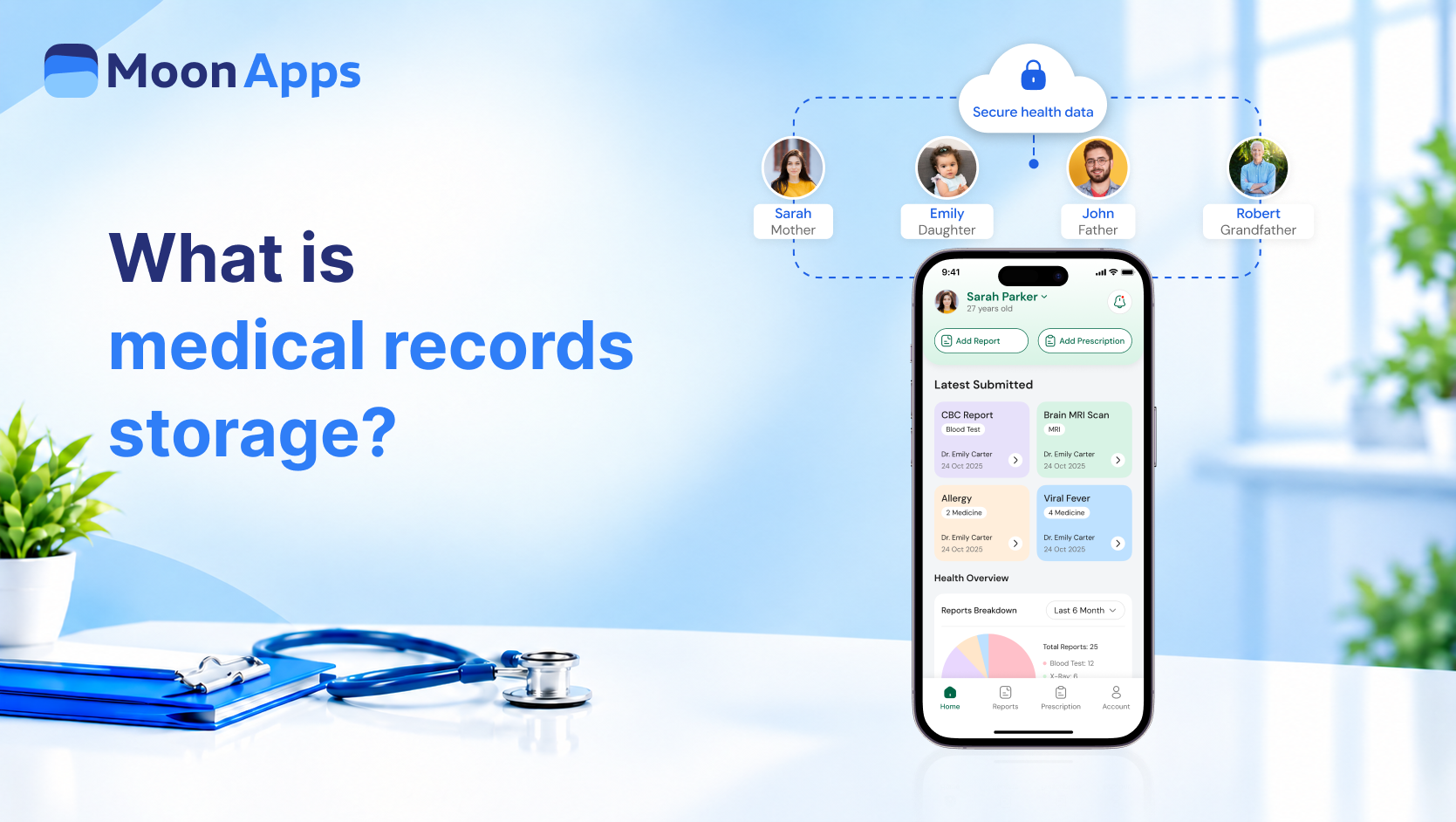
My Medical Records by Moon Apps is a user-friendly app for organizing personal medical records. It is a simple and easy-to-use medical record management app designed for everyday users. The app offers a secure and convenient way to manage all health-related information. This makes it easy to access your records anytime from your mobile device.
Add prescriptions: The “Add Prescription” option lets you add and maintain a doctor’s prescription. This makes it easier to track treatment history and previously prescribed medications.
Quickly add reports: Easily add the reports from the device gallery by using the “Upload Reports” option. You can categorize and search reports by type, hospital, and doctor. You can upload blood test reports, X-rays, MRI and CT scans, medical PDFs, and other documents.
AI-generated summary reports: Its AI feature summarizes your uploaded reports and presents the summary to you. This helps you gain an overview of your reports; however, it should not replace the original report or professional medical advice.
Manage family records: This medical record app allows you to add your family members and their medical data. Easily add your parents, spouse, children, or any other relatives.
View recent reports: View recently submitted reports to keep track of the latest submitted medical report.
Health dashboard: Provides an overview of reports and prescriptions by category and date. This simplifies tracking and document management.
Stay prepared before the unexpected happens.
From the doctor’s prescription to lab reports, manage everything smartly with the My Medical Records app.
Try It Now
FAQs
It depends on the type of information, its purpose, and applicable laws and guidelines in your region. However, you must keep the medical records as long as they may be relevant to your future needs. Keep important records in digital format for longer periods.
The following are certain factors affecting medical records’ retention period:
- Types of medical records
- Ongoing or long-term care
- Age and health history
- Legal or insurance needs
- Applicable laws and guidelines
Digital storage is a convenient option for maintaining medical records. You can easily store doctors’ prescriptions, blood reports, and other important documents in the cloud or in a medical record application, which can be stored safely even for longer periods.
Yes, My Medical Records by Moon Apps is a convenient mobile application that lets you maintain and access your medical records whenever you need them. It allows you to store doctors’ prescriptions, X-rays, lab reports, and other crucial information in one place. You can also add family members and easily organize their medical details. Its AI summary feature provides an overview of your records.
Share Article: